This is another of those textbook reactions, involving reaction of a carbonyl compound with a phosphonium ylid to form an alkene and a phosphine oxide. The reaction continues to be frequently used, in part because it can be highly stereospecific.
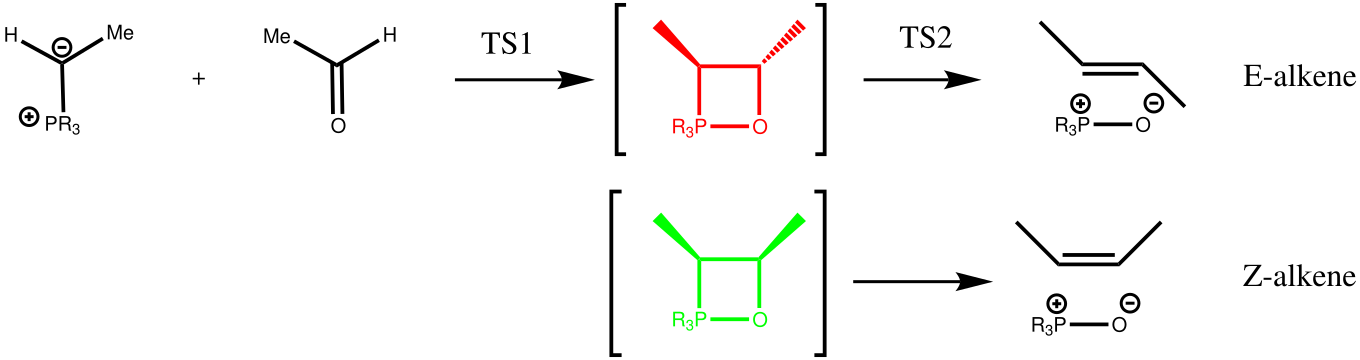
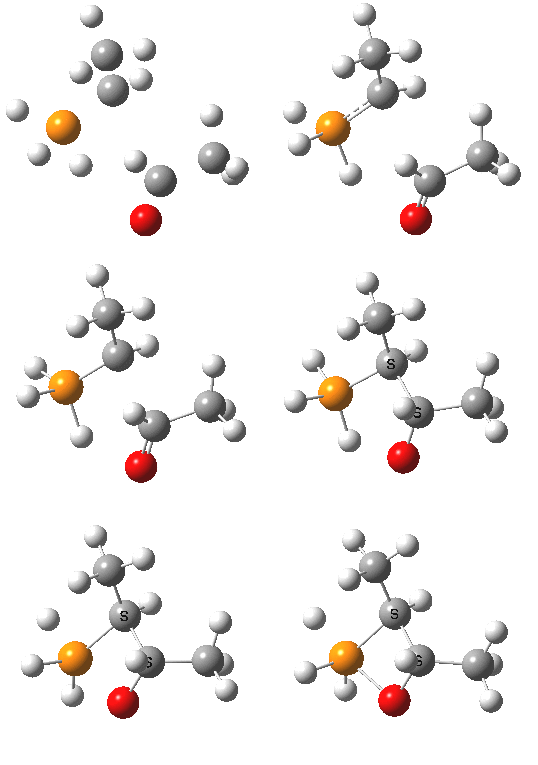
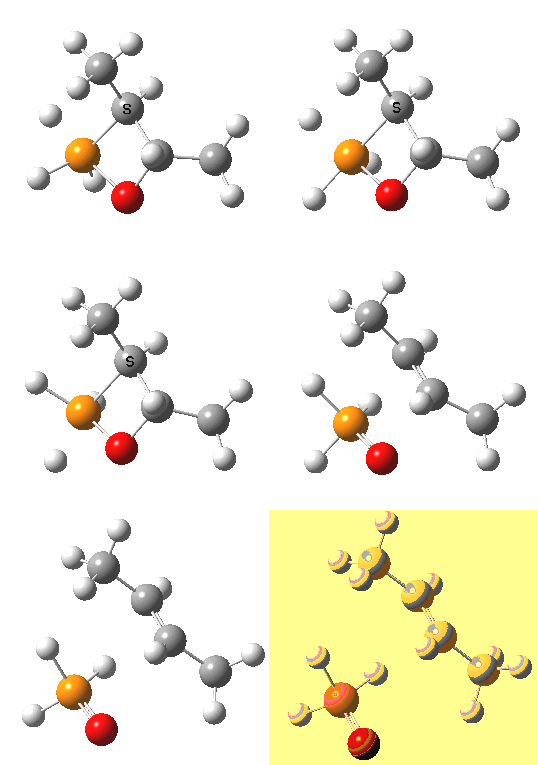
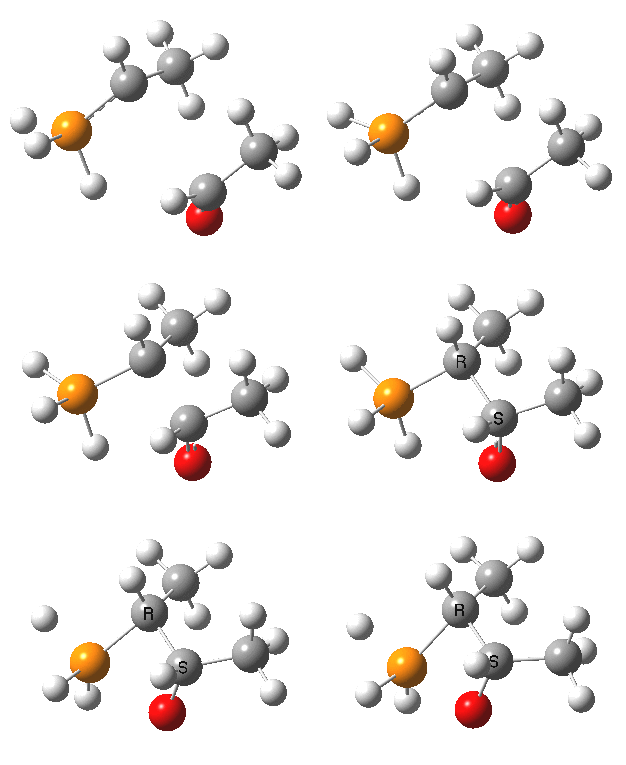
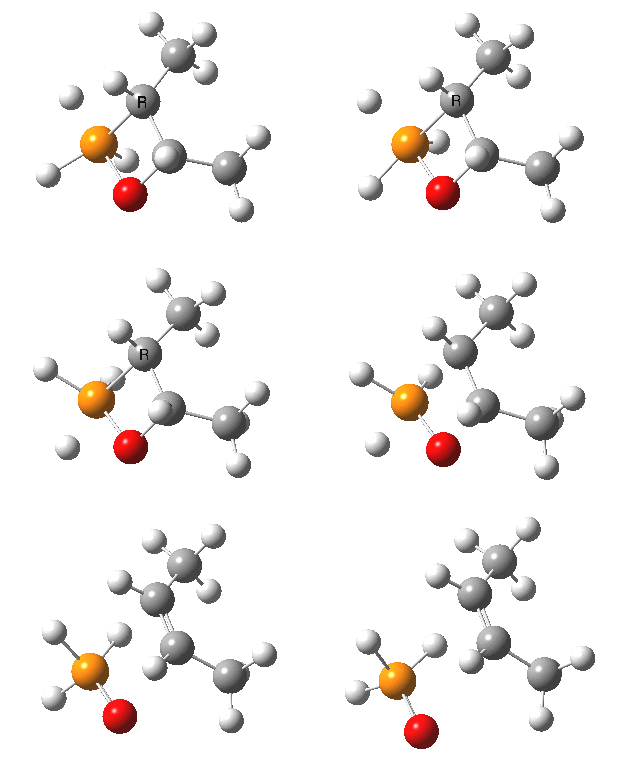
Thus the standard version tends to give Z-alkenes with good specificity, and is thought to proceed via an oxaphosphatane 4-ring intermediate. The reaction and its stereochemistry is sensitive to the reagent (including the nature of the R group), and so one model cannot capture all the aspects of this transform. Here I am starting with the very simple model shown above, where R=H (ωB97XD/6-311G(d,p)/SCRF=tetrahydrofuran). There are four transition states to consider; whether the rate-determining (stereochemical determining) step is TS1 or TS2, and whether the relative orientation of the two (in this example methyl) groups are syn or anti, resulting in E– or Z– alkenes. The most interesting issue would be whether the mechanism can account for why the apparently more sterically hindered route leading to the Z-alkene is often the actual outcome.
| Leading to E-alkene | |
|---|---|
| TS1 0.0 kcal/mol | TS2 -3.9 |
 |
 |
| Leading to Z-alkene | |
| TS1 0.0 kcal/mol | TS2 -2.6 |
 |
 |
Key comments about these results:
- TS1 is higher than TS2 in both cases, and so (for these substituents) is rate determining.
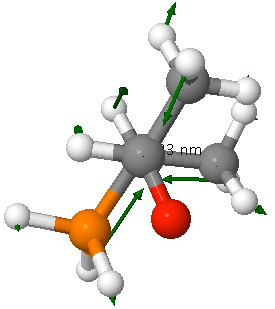
- At this transition state, the two methyl groups are moving apart for the E-isomer but together for the Z-isomer. But at the transition states themselves, the steric interaction of these two groups is fairly similar, and the Z-transition state has much better antiperiplanar bond alignments compensating for the methyl clash. To put it in a nutshell, the increased steric clash for formation of the Z-isomer comes only AFTER the transition state is passed.
E-alkene forming Z-alkene forming 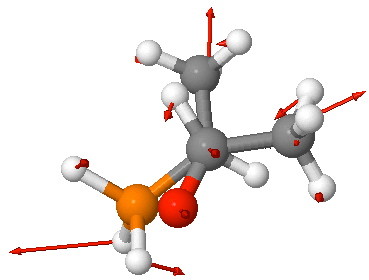
- The gradients of the IRC profile for this step of the Wittig reveal that much of the action occurs after the transition state is passed, at IRC=3 for the E and IRC=4 for Z, this comprising rotation around the first formed C-C bond in order to create the P-O bond. This is where the steric clash of methyls for the Z-isomer really kicks in, but it has no impact upon the energy of the transition state, coming too late for that.
E-alkene forming Z-alkene forming 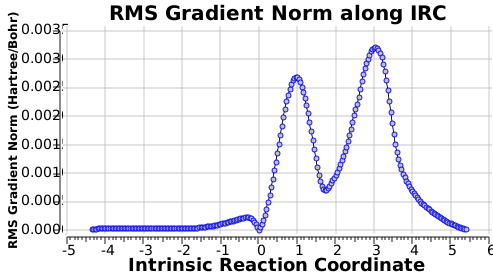
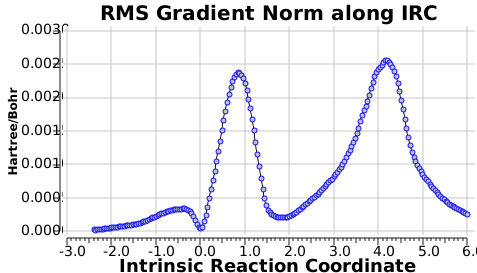
- The model we have built is sterically incomplete; we have used PH3 rather than eg PPh3 (done so as to allow an IRC to be computed in a reasonable time). If we look at the models above (click on the images to get a 3D model), then it is clear that the E-transition state will suffer the greater steric clash of a methyl with one of the phenyl groups on the phosphorus than the Z-isomer will. This probably accounts for why this latter isomer is the normal stereochemical outcome.
Much more could be done here, but even a fairly simple model of the Wittig reaction can bring a lot of insight into its unique characteristics.
Author

Tags: Reaction Mechanism, Tutorial material, Wittig reaction
[…] bond is formed from appropriate reactants where no bond initially exists (another example is the Wittig reaction), with the involvement† of a 4-membered-ring metallacyclobutane ring 1 (again, very similar to […]
Dear Henry,
Thank you very much for posting this information. This is very helpful!
Igor,
This probably needs repeating with R=Ph rather than R=H.